
The designer who shapes a product's direction is often the person asking the clearest question—not the person arriving with the most polished answer.
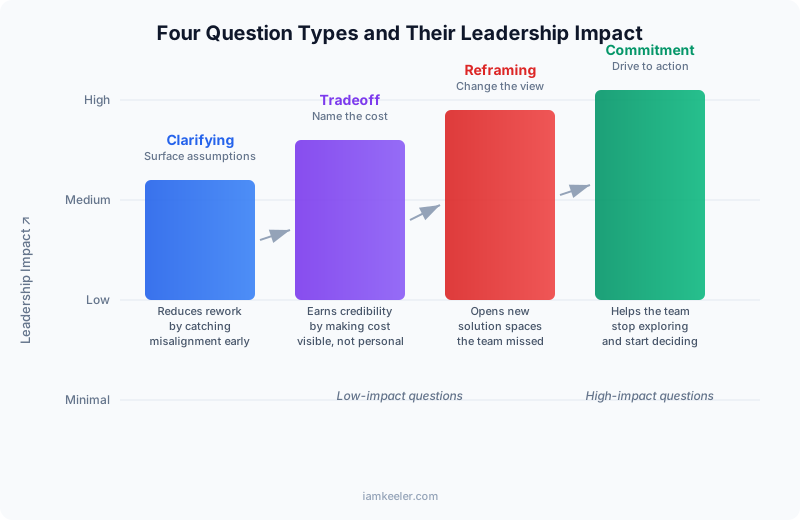
I have played both roles. The difference was not how much I knew about design. It was whether I helped the team expose an assumption, understand a tradeoff, reframe the problem, or make a decision.
The answer trap
Design education trains us to produce answers: research the brief, explore options, iterate, and deliver a solution. That skill matters, but it is not enough for leadership.
A polished solution gives a cross-functional team two choices: accept it or reject it. A useful question creates room to examine the reasoning and build a better answer together.
I have watched one question—"What would we do differently if this were the only flow users saw?"—change the direction of a discussion. The designer did not need to defend a solution. The team found a better one together.
Four questions that move work forward
1. What are we assuming?
One common reason teams build the wrong thing is an untested assumption about the user, the evidence, or the business constraint.
Instead of asking, "Is this the right design?" ask, "What must be true for this to be the right design?"
I have watched teams debate visual treatments for thirty minutes before discovering that they did not agree on the primary user. Asking, "Who are we optimizing this flow for?" resolved the debate in thirty seconds by exposing the misalignment.
The question can prevent the rework that would otherwise surface three sprints later.
2. What does this choice cost?
Naming a tradeoff earns more trust than defending every detail.
"We should not cut this animation" sounds like a preference. "If we cut the animation, what signal tells the user that the action succeeded?" connects the choice to a consequence.
The question makes the cost visible without requiring anyone to be wrong.
3. Are we solving the right problem?
A team choosing between feature A and feature B may be using a frame that is too narrow.
Ask, "What outcome are we trying to create for the user?" The answer may reveal that neither feature addresses the real need.
This is one way designers earn influence by reducing ambiguity: they help the team see a better problem before committing to a solution.
4. What are we deciding now?
Product teams also need to know when to stop exploring.
After thirty minutes of discussion, ask: "Can we agree on this sprint's scope and defer the edge cases to the next one?" That question names the decision, the timing, and the next step.
Commitment questions help the team ship because they turn a discussion into an action.
Questions travel better than fixed answers
The right answer for one team, user base, and technical constraint rarely transfers unchanged to another context. The habit of exposing assumptions and tradeoffs does.
In ADPList mentoring, the designers who grow quickly often learn to ask what the team has not considered, what a choice costs, who the decision serves, and when discussion should end.
Those questions do not make a designer look uncertain. They make the team better.
Build the habit
Enter each cross-functional meeting with one question prepared in advance. Make it about what the team assumes, has not seen, is avoiding, or is ready to decide.
One good question changes the dynamic. You stop defending screens and start helping the team think.